Why Concrete Sinks in the Yakima Valley (and How to Slow It Down)
Concrete sinks when the ground under it moves or washes away, and in Central Washington water is usually the reason.
October 7, 2026 · 4 min read
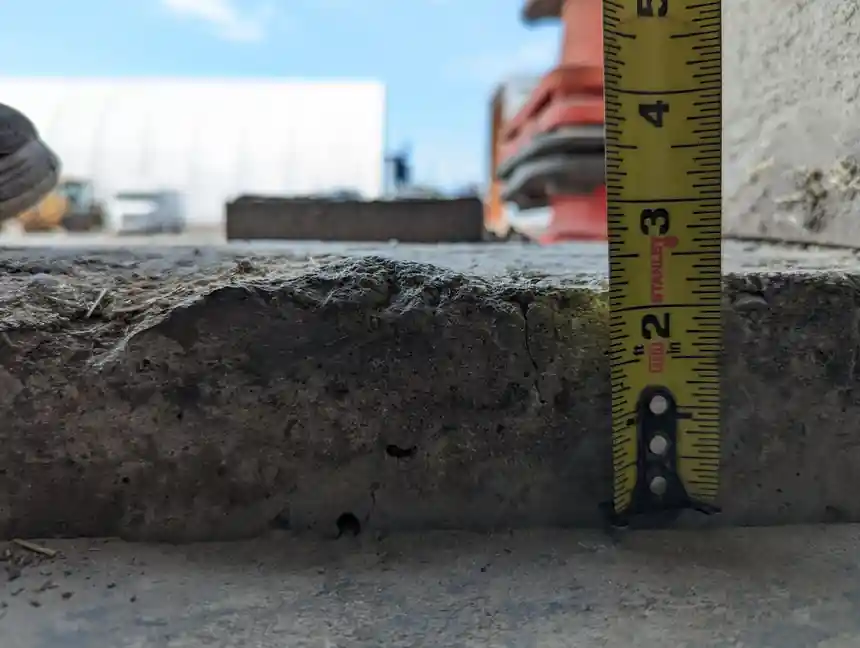
Concrete sinks because the soil underneath it settles, erodes or washes out, leaving the slab with nothing to rest on. In the Yakima Valley the most common culprit is water: irrigation, downspouts and runoff carrying fine soil away a little at a time. Poor compaction when the slab was poured and winter freezing and thawing do the rest.
The slab itself is usually fine. Knowing what's happening underneath helps you decide what to do, and what to stop doing, so it doesn't happen again.
Water is the main cause
Water moving along or under a slab carries away the finest particles of the soil that support it. It doesn't happen overnight. A little goes with every storm and every irrigation cycle until there's a hollow space under the concrete. Then the slab drops into it.
We see this most around:
- Driveways with sprinklers or irrigation lines close by, especially along the edges.
- Downspouts that dump right beside a patio or walkway.
- Slabs near slopes or retaining walls, where runoff concentrates.
- Commercial entrances where snowmelt and old drainage let water pool.
- Garage floors where meltwater from vehicles and wet ground at the door slip under the edge.
Loose fill and shortcuts at the start
A lot of settling is baked in on day one. If the ground under a slab wasn't compacted well before the concrete went down, it keeps compressing for years, especially under the weight of vehicles. That's a common story with garage floors and with driveways in newer neighborhoods where the landscaping and irrigation went in without much thought for what happens to the soil under the concrete.
Freezing, thawing and moving soil
Water in the ground freezes at night and thaws in the afternoon, and that cycle can repeat many times in a Central Washington winter. Each round loosens the ground a bit and pushes any open crack a little wider. Clay-rich soils swell when wet and shrink when dry, which moves a slab off level on its own schedule. Tree roots add to it, pushing a panel up while they grow and leaving a void when they decay.
Signs the support is going
You can often spot the problem before the slab is visibly sunk. Look and listen for:
- A hollow sound when you walk across the concrete or bounce a ball on it.
- A visible gap under the slab when you look at the edge from the side.
- Puddles that linger after rain, which means the surface no longer drains the way it should.
- Cracks that keep getting wider, or one side of a crack sitting higher than the other.
- A lip at joints between panels.
Sticking doors or windows can also point to settling, though that can have other causes. We don't do structural foundation repair, so if the clues suggest something bigger than a slab, we'll tell you straight.
What you can do to slow it down
You can't stop soil from ever moving, but you can take away most of the water that moves it:
- Keep gutters clean and run downspouts well away from slabs, ideally five feet or more.
- Make sure the ground slopes away from walkways, driveways and the garage, not toward them.
- Aim sprinkler heads away from concrete and check for slow leaks.
- Seal open cracks before winter so water doesn't reach the soil underneath.
- Where water keeps collecting, consider a channel drain, French drain or catch basin.
Lifting and stabilizing the slab
Once a slab has dropped, drainage fixes alone won't bring it back up. That's where lifting comes in. We drill small holes, about 5/8 of an inch, and inject Eco-Rise polyurethane foam under the slab. The foam fills the voids, firms up the loose soil and raises the concrete to a stable level. It cures in about 15 minutes, and most jobs are finished in a day.
Stabilizing is the same idea aimed at the ground. If the slab hasn't dropped much but the soil under it is hollow or soft, foam can fill those voids so the concrete doesn't keep sinking. Lifting a slab and leaving a void behind it is only half a repair, so we pay attention to the ground and not only the surface.
Foam isn't a substitute for good drainage, though. If a downspout is still pouring against the edge of the slab, fix that too, or the same thing will happen again.
Sunken concrete doesn't repair itself. A small drop widens as more soil washes out, cracks open, and more water gets in. Fall is a good time to deal with it, because lifting and sealing before the first hard freeze keeps winter from making it worse.
If you've noticed a slab dropping, tilting or sounding hollow, call Level Best Northwest at (509) 796-0658. We'll take a look, tell you what's going on underneath, and give you a free estimate. We serve the Yakima Valley, Tri-Cities, Ellensburg and the towns around them.
Level Best Northwest, (509) 796-0658
Call (509) 796-0658More articles
Concrete Leveling vs Replacement: Which Does Your Sunken Slab Need?
Most sunken concrete is still good concrete sitting on bad soil, and that changes the repair completely.
Foam Lifting vs Mudjacking: What's the Difference?
Both methods lift sunken concrete, but they differ in weight, hole size, cure time and how well the repair holds up.