CONCRETE SEALING · YAKIMA VALLEY & TRI-CITIES
Concrete sealing that holds up to freeze-thaw winters
A durable protective barrier against moisture, stains and everyday wear. Sealing keeps concrete easier to clean, improves its appearance and extends its life.
Chapter 01
What a Central Washington winter does to bare concrete
Even when concrete looks solid, it is constantly exposed to moisture, chemicals and temperature swings. Water soaks in, freezes, expands and thaws, and the Yakima Valley and Tri-Cities see that cycle all winter. Over time that is how a good slab picks up surface cracking and deterioration.
Unsealed concrete also takes on oil, water and chemicals easily. Surfaces that stain quickly or are hard to clean are usually surfaces that want a sealer.
Sealing addresses all of that before it turns into something serious and costly. It is the right call when the concrete is structurally sound and the goal is protection, not repair.
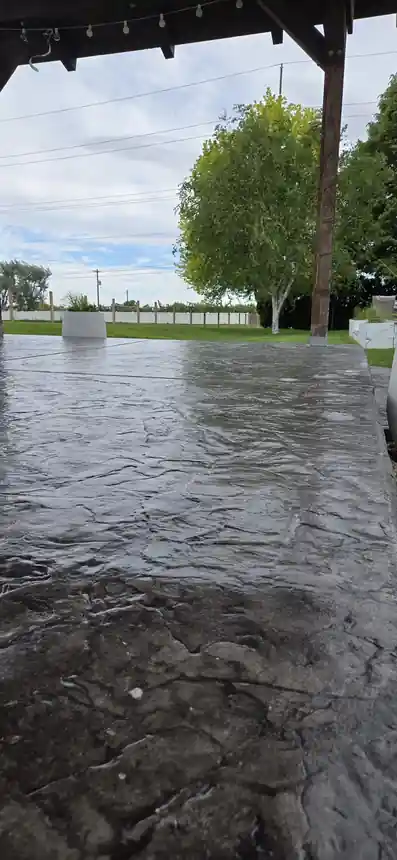
Stamped patio under a pergola, fresh sealer still glossy
Prep, then a clear acrylic barrier
Sealer only works as well as the surface under it, so we prepare first. High-pressure washing removes surface dirt and debris, and we acid wash when needed to prepare the surface properly.
Then we apply a clear acrylic sealer. It penetrates and coats the surface, creating a durable barrier that repels moisture and contaminants. It also makes the concrete easier to clean and improves its overall appearance, which is why stamped patios and decorative surfaces look so good with a fresh coat.
Sealing is a preventative step, so the job is quick compared with the repairs it helps you avoid.
Chapter 03
How long it lasts and when to reseal
Most concrete benefits from resealing every few years. How long a coat lasts depends on traffic, sun and weather exposure, and high-use surfaces may need it more often. Professional sealing typically extends the life of driveways, patios and walkways by several years.
New concrete can be sealed too. Let it fully cure first, usually about 28 days, and then sealing protects it from moisture, stains and freeze-thaw damage from the start.
One honest limit: sealing reduces the water intrusion that causes surface cracking, but it will not fix a slab that has sunk from soil settling. That calls for leveling or stabilizing. If you are not sure which one you need, give us a call at (509) 796-0658 and we will tell you straight.
Level Best Northwest has more than 10 years in concrete and a 5-star reputation across the Yakima Valley and Tri-Cities. Sealing is the cost-effective way to preserve the concrete you already have.
Questions about concrete sealing