Concrete resurfacing · Yakima Valley & Tri-Cities
Resurfacing for worn, scaled and pitted concrete
Concrete that has gone rough, flaky or tired does not always have to come out. If the slab is still solid underneath, we give it a new surface and a sealed finish.
Chapter 01
What wears out a slab that is still sound
Weather, freeze-thaw cycles and everyday use break down the top of a slab long before the slab itself gives up. The concrete underneath can be perfectly stable while the surface turns cracked, flaky, rough or patchy in color.
The signs are easy to spot. Scaling and spalling, where the surface starts to flake or peel. Pitting and rough texture left by freeze-thaw. Cracks that hurt the look but not the stability. Color that has gone uneven with age, so the whole property looks neglected.
None of it heals on its own. Surface damage keeps spreading, and a slab that could have been resurfaced eventually turns into one that has to be replaced. That is why a courtyard in Yakima or a walkway in Wapato is worth a look as soon as the surface starts to go.
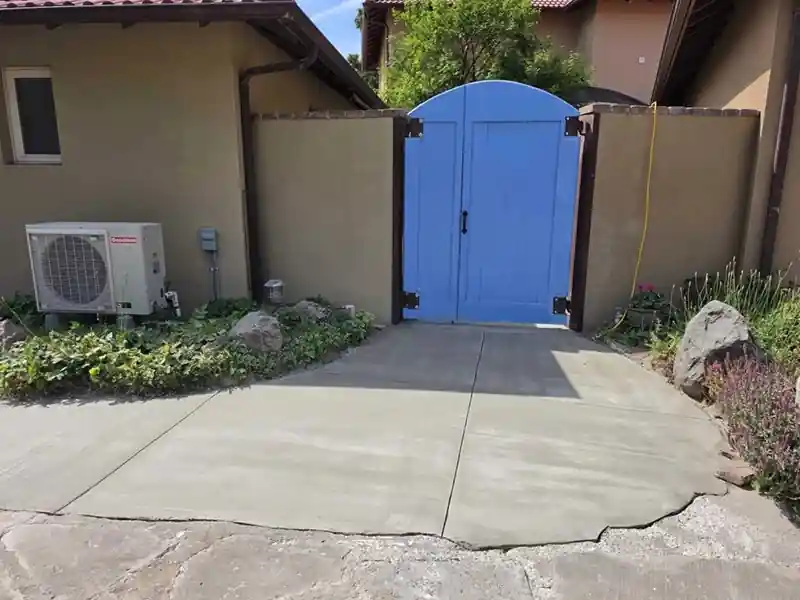
A courtyard slab at blue garden gates, resurfaced smooth and sealed
How a tired slab gets a new surface
Resurfacing is a sequence, and the prep is most of the job. We recut expansion joints where they are needed, then grind out the cracks and fill them with epoxy gel. The whole surface is ground so the new material has something to grip, and then it is high-pressure washed to clear away debris and contaminants.
Then comes the new surface itself: two to three coats of cement-based overlay material. The final coat is broom finished for traction and a clean appearance, and the slab is sealed with a clear acrylic sealer for protection.
The method also suits tight or hard-to-reach concrete, like a slab behind a house, where tearing out and pouring new would be disruptive and costly. The slab stays where it is, so there is no demolition and very little disturbance to landscaping or the structures around it.
Chapter 03
What resurfacing buys you, and where it stops
Resurfacing typically runs about 40 percent less than full replacement, and it extends the usable life of the concrete by 10 to 15 years or more when it is properly installed and maintained. It also keeps a whole slab out of the landfill, since the existing concrete stays in place.
The limit is the slab underneath. If it has deteriorated into gravel or severe chunking, or it is structurally failed, resurfacing is the wrong tool and replacement is the honest answer. We will tell you which side of that line your concrete is on before any work starts.
More than 10 years of experience and a 5-star reputation, and we prioritize repair over replacement whenever the concrete allows it. For a free estimate on worn concrete in Yakima, Union Gap, Wapato or Ellensburg, call (509) 796-0658.
Straight answers
Questions about concrete resurfacing
From our own jobs
Pitted and tired, then smooth and sealed.
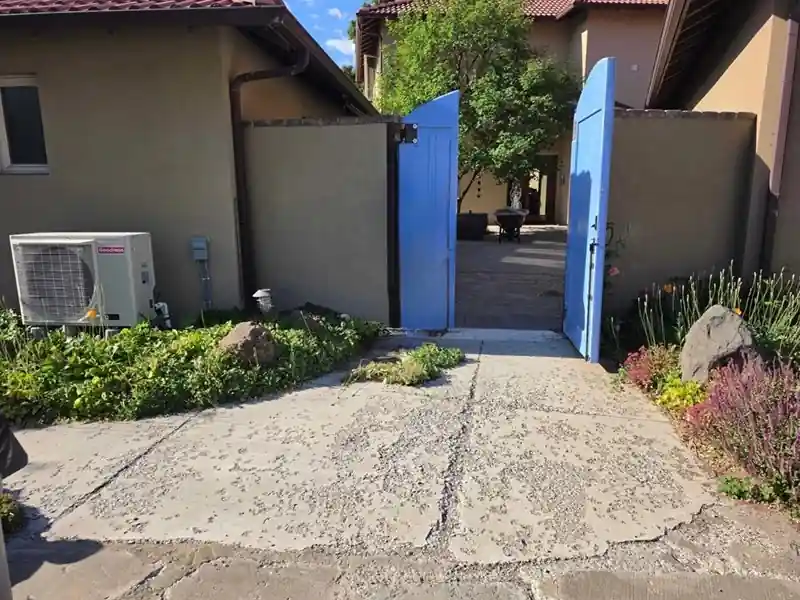
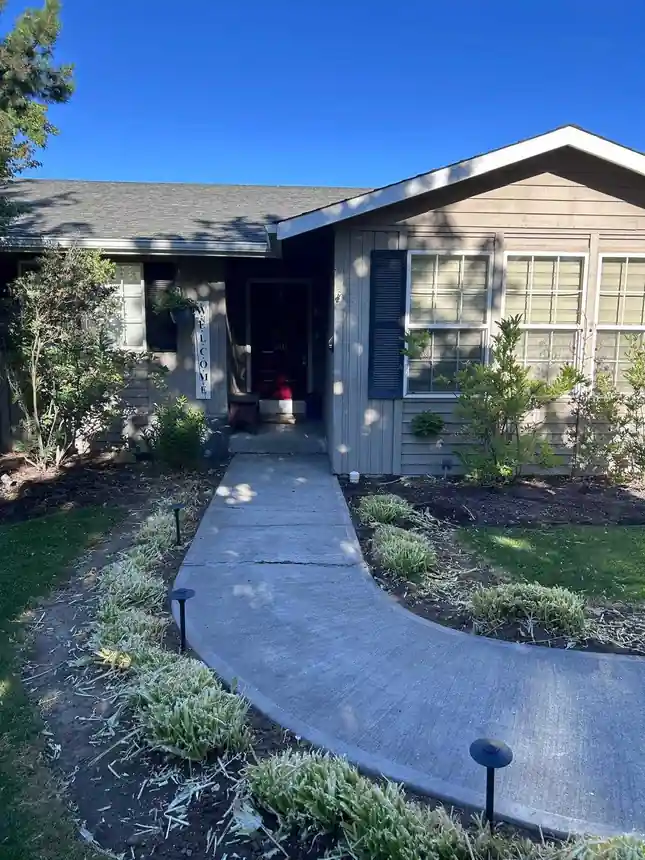
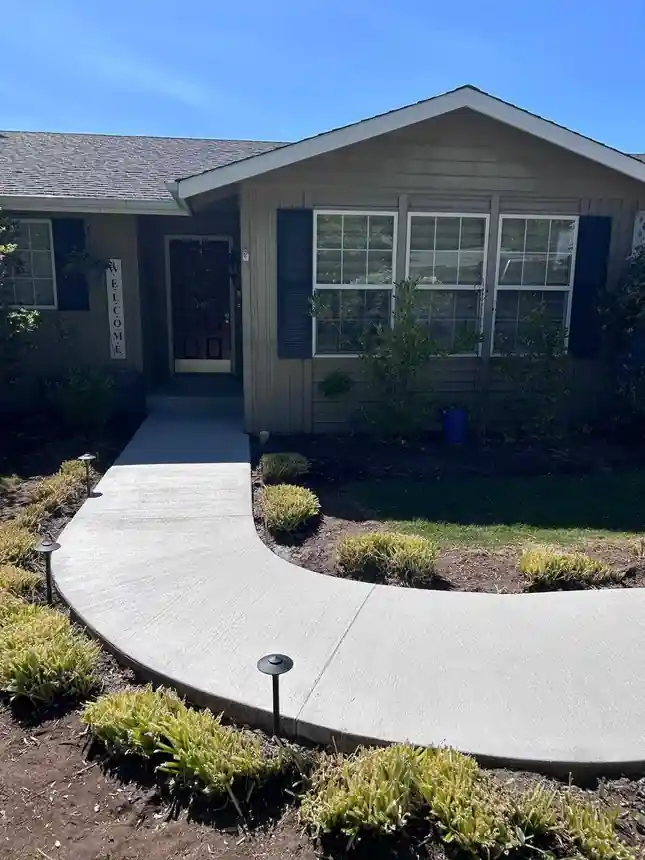
A curved walkway is awkward to tear out and re-pour. Resurfacing leaves it in place.
No demolition, and little disturbance to the landscaping around it. See more finished work in the job gallery.