Foam Lifting vs Mudjacking: What's the Difference?
Both methods lift sunken concrete, but they differ in weight, hole size, cure time and how well the repair holds up.
October 7, 2026 · 4 min read
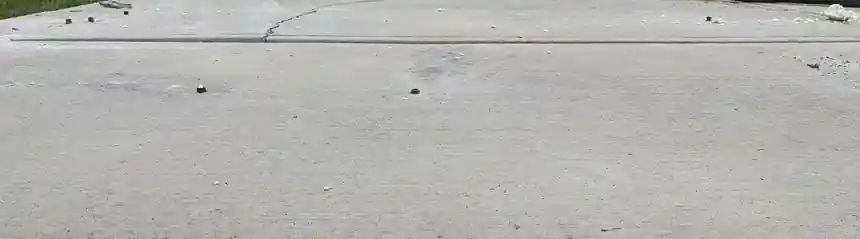
For most sunken concrete in the Yakima Valley, polyurethane foam is the better choice. It's lighter than the slurry used in mudjacking, it goes in through much smaller holes, it cures in about 15 minutes, and it doesn't wash out the way a cement-and-soil mix can. Mudjacking does lift concrete and usually costs less up front, but it tends to be the shorter-lived repair.
You'll also hear these jobs called slab jacking, slabjacking or foam jacking. The names blur together, so here's what actually separates the two approaches.
How mudjacking works
Mudjacking is the older method, and it's been around for decades. A crew drills holes in the sunken slab, usually one to two inches across, then pumps in a slurry of cement, water, and soil or sand. The slurry fills the void under the slab and pushes the concrete back up.
It works, and it's a real method, not a scam. The trade-offs are weight, cure time and staying power. The slurry is heavy, so it adds load to soil that was already struggling to hold the slab. It can take a day or more to cure. And because it's made of cement and soil, moving water can erode it over time and let the slab settle again.
How foam lifting works
Foam lifting swaps the slurry for an expanding polyurethane foam. We use Eco-Rise, a two-part, closed-cell foam made in the USA for concrete lifting, soil stabilization and void filling. The two liquids are pumped through penny-sized holes, about 5/8 of an inch, where they mix and expand. The foam fills the voids, firms up loose soil and raises the slab to grade.
Because it's lightweight, it doesn't pile extra stress on the ground. Because it's closed-cell, water doesn't soak into it. And because it cures in about 15 minutes, the slab is ready to use the same day.
Side by side
- Material: mudjacking uses a cement and soil slurry; foam lifting uses expanding polyurethane.
- Weight: slurry is heavy and loads weak soil; foam is light and adds very little.
- Hole size: roughly one to two inches for mudjacking, about 5/8 of an inch for foam.
- Cure time: a day or more for slurry, about 15 minutes for foam.
- Water: slurry can wash out and erode; foam doesn't absorb water or break down.
- Up-front cost: lower for mudjacking, higher for foam.
Put simply, mudjacking is cheaper on day one, and foam is the one built to stay put. If a repair has to be redone in a few years, the cheaper option isn't cheaper anymore.
Why Central Washington soil favors foam
Water is what undoes most concrete here. Irrigation, downspouts and snowmelt move through the ground, and winter freezing and thawing shifts it again. Those are exactly the forces that wear away a cement slurry. A foam that doesn't absorb water stands up to them instead of being undone by them.
Poor drainage is the most common reason slabs sink in the first place. If the water problem isn't addressed, any lift is working against it, which is one more reason a repair that shrugs off moisture makes sense in this part of the state.
How a foam lift goes at our shop
We measure before we lift. Merle sets a dial gauge across the slab to read the exact drop, because guessing the height is how you overshoot and crack a panel. From there the job runs like this:
- Measure the settlement with the gauge, so the panel comes up flush and not past level.
- Drill small ports through the settled areas.
- Inject the foam, which fills the voids, firms up the soil and raises the slab.
- Patch the holes once the foam has cured, and clean up.
On an Ellensburg sidewalk with a settled joint, we measured the drop, brought the panel back up until a level laid across the joint sat flat, and the walkway was back in use that afternoon. No demolition and no new pour.
Is there a case for mudjacking?
Honestly, sometimes. If cost is the deciding factor, the slab sees light use, and the ground stays dry, mudjacking can do the job for less money today. We wouldn't suggest it for anything exposed to drainage, irrigation or winter freezing, because that's where slurry erodes and you end up paying for the same repair twice.
We use polyurethane foam because it holds up in our soils, so foam lifting is what we do. If you're comparing quotes from different companies, we're happy to talk through the trade-offs for your specific slab, and if replacement turns out to be the honest answer, we'll tell you that too.
Have a sunken driveway, walkway or patio and want to know your options? Call Level Best Northwest at (509) 796-0658 for a free estimate. We serve the Yakima Valley, the Tri-Cities and Ellensburg.
Level Best Northwest, (509) 796-0658
Call (509) 796-0658More articles
Concrete Leveling vs Replacement: Which Does Your Sunken Slab Need?
Most sunken concrete is still good concrete sitting on bad soil, and that changes the repair completely.
Why Concrete Sinks in the Yakima Valley (and How to Slow It Down)
Concrete sinks when the ground under it moves or washes away, and in Central Washington water is usually the reason.