Cracked Concrete: Seal It, Resurface It, or Lift It?
The right repair depends on whether the crack is the whole problem or just a sign of something moving underneath.
October 7, 2026 · 4 min read
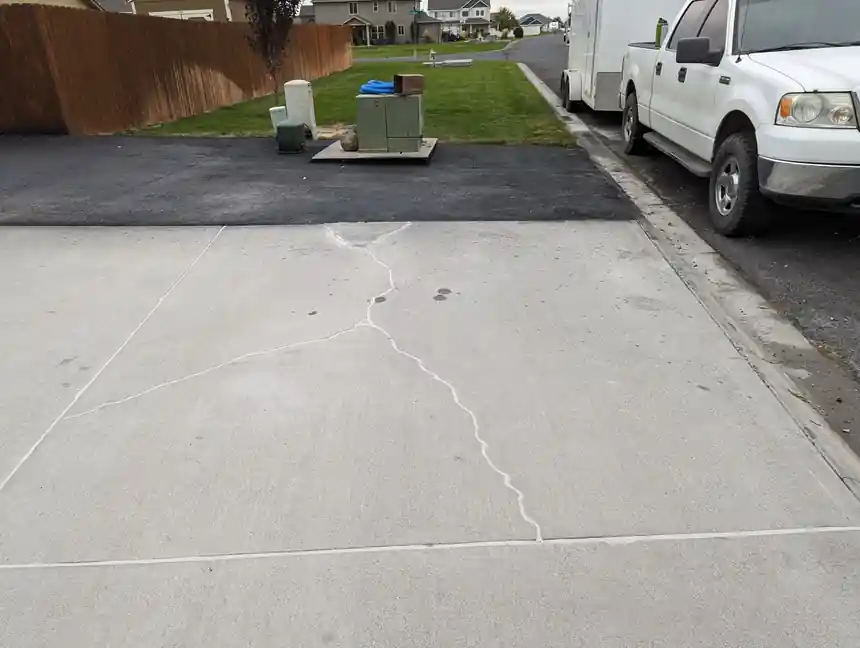
If the slab is level and the concrete is solid, seal the crack. If the surface is worn, pitted or flaking, resurface it. If one side of the crack sits higher than the other, the slab has moved and needs to be lifted first. Choosing the wrong one means paying twice, so it's worth knowing which situation you're in.
Start by looking at the crack, not just the surface
Some cracks are just concrete being concrete. It shrinks as it cures, and it expands and contracts with temperature, so thin cracks show up on plenty of healthy slabs. Others are telling you something. A crack that keeps getting wider, holds water, or runs along a slab that's also tilting is usually a symptom of soil that has moved or washed out.
A simple test is to run your hand or a straightedge across the crack. If the two sides are flush, you're looking at a surface problem. If one side is higher, the slab has shifted, and sealing alone won't hold.
When sealing is the right fix
Sealing works on cracks and open joints in slabs that are still level and sound. We clean out the crack so dirt and debris don't get in the way, then fill it with a flexible sealant. Flexible matters, because concrete moves with the temperature, and a rigid filler cracks again. The sealant moves with the slab and keeps water out.
Keeping water out is the whole point. An open crack lets water reach the soil under the slab, and that's how a small crack becomes a sunken one. In winter, water in a crack freezes and expands, then thaws and drains away, widening the crack a little with each cycle.
We did exactly this on an exposed-aggregate driveway in Naches. One panel had a crack across it and the control joints had opened up. We cleaned out the crack and joints and filled them with flexible sealant, ahead of winter, so that water couldn't get in and freeze.
The best moment to seal is autumn, before the first hard freeze. Irrigation season is over, the concrete is dry, and the weather is still mild enough for sealant to bond properly. Wait until the middle of winter and the same crack has already been pried wider a few dozen times.
When the slab needs to be lifted first
If a crack has a raised lip, or the slab slopes toward the garage or house, sealing is a bandage on a bigger problem. The slab has lost support. We lift it first with Eco-Rise polyurethane foam, which fills the void underneath and raises the concrete back to grade. Then we seal the cracks so the same water can't get back in.
We did both on a sunken garage floor in Terrace Heights. The slab had dropped about 3 inches, and we raised it back to level and sealed the cracks in the same visit. Sealing after the lift is what keeps the repair working, since the water that caused the sinking can no longer find a path in.
When to resurface instead
Resurfacing is for concrete that's solid underneath but tired on top. Signs include:
- Flaking or peeling, which is often called spalling.
- A rough, pitted texture.
- Stains and uneven color that cleaning won't fully fix.
- Fine surface cracks across an otherwise level slab.
A fresh surface layer restores the look and feel of a worn driveway, walkway, patio or step without the cost and disruption of tearing it out. We tell customers that properly installed and maintained resurfacing can extend the usable life of the concrete by 10 to 15 years or more. It also leaves your landscaping and drainage as they are.
Resurfacing doesn't fix a slab that has sunk, though. If the base is moving, lift and stabilize first, then resurface.
Clean and seal to protect the result
Concrete is porous. Left alone it soaks up water, oil and grime, and in shaded spots it can grow moss or algae. Cleaning removes oil, dirt and stains, and sealing puts a protective barrier on top that helps against freeze-thaw, moisture and staining. A fire pit patio is a good example: ash and soot stain bare concrete, and a sealed surface is much easier to keep clean.
We generally suggest sealing after a repair or resurfacing, and as maintenance for a driveway or patio that's in good shape but still exposed to the weather.
A quick way to decide
- Level slab, open crack or joint: seal it.
- Crack with one side higher, or a tilting slab: lift it, then seal it.
- Worn, flaking or pitted surface on a solid slab: resurface it.
- Solid and level but dirty or unprotected: clean and seal it.
- Crumbling or broken into loose pieces: replacement may be the honest answer.
Not sure which group your concrete falls into? Call Level Best Northwest at (509) 796-0658 for a free estimate. We serve Naches, Yakima, Selah, Ellensburg, the Tri-Cities and the rest of the Yakima Valley, and we'll tell you what the slab needs and what it doesn't.
Level Best Northwest, (509) 796-0658
Call (509) 796-0658More articles
Concrete Leveling vs Replacement: Which Does Your Sunken Slab Need?
Most sunken concrete is still good concrete sitting on bad soil, and that changes the repair completely.
Foam Lifting vs Mudjacking: What's the Difference?
Both methods lift sunken concrete, but they differ in weight, hole size, cure time and how well the repair holds up.